- Details
- Written by Gordon Prentice
Background: A special public meeting was called on Monday 8 May 2017 to consider a planning application by numbered company 2439107 Ontario Inc who plan to insert a four storey rental apartment building into a stable low rise residential neighbourhood at 751-757 Gorham Street. The area is typically detached and semi-detached housing. The developer, David Beswick, needs amendments to the Town's Official Plan as apartment buildings are specifically prohibited. He also needs a Zoning By-law amendment. He has called on the services of Mr Howard Friedman. 
Howard in Action
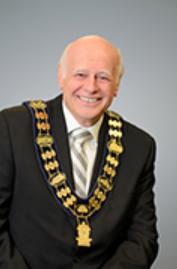
On Monday 8 May 2017 I drop in on the public meeting in the Town's Council Chamber to see Howard in action. (That's him in the hot seat, right)
Over a year ago I blogged about the shadowy Mr Friedman who flits between the public and private sectors, acting as a paid go-between, smoothing things out between the Town and the development industry and acting as a lubricant, progress chaser and general factotum.
By trade he is a planning consultant in private practice in Newmarket. He was at Monday's meeting to give a presentation on behalf of the developer. But Mr Friedman also wears another hat as the person who chairs the Town’s “Development Co-ordination Committee” whose members include senior Town staff from planning, engineering and legal services as well as people from the development industry.
Howard's alter ego
Mr Friedman's alter ego has been working for the Town for 19 years with two years left to run on his contract. Town staff come and go but he is a constant. He knows where all the bodies are buried.
It is a very curious state of affairs.
Anyway... I am waiting for Mr Friedman to open his presentation by reassuring the public there is no conflict of interest between his two day jobs - working for the Town and developers simultaneously. But I hear nothing. 
As it happens, questions were raised by councillors last year about a possible conflict of interest when they were extending his contract with the Town for another three years but they were assured everything was done by the book.
No conflict of interest
The Town’s Director of Planning, Rick Nethery, said if there was a conflict of interest Mr Friedman would declare it, ask a staff member to take the chair, and leave.
The developers love the Development Co-ordination Committee so much so they reimburse the Town for the cost of employing Mr Friedman.* The old banker, Tony Van Trappist, is also a fan of the arrangement because it saves the Town money.
But what do the developers get out of it? Except loads of inside knowledge about how the Town operates and insights into who says what and why.
In February 2016, the Director of Planning, Rick Nethery, explained Mr Friedman's role this way:
"HBR (Mr Friedman’s firm) has managed to ensure a balance between the Town’s best interests being protected while respecting the challenges that face developers.”
Regional Councillor John "I feel your pain" Taylor has now declared he is opposed to the Gorham Street development.
What advice, I wonder, is Mr Friedman offering to his client, Mr Beswick, on how best to address this latest turn of events?
This email address is being protected from spambots. You need JavaScript enabled to view it.
Update later on 12 May 2017 * In fact, the 2016 report that went before councillors makes it clear:
"The costs incurred by the Town through the services of the Development Coordinator are forwarded directly to the development community for payment, ensuring that the Development Coordinator position is revenue-neutral to the Town. The total amount billed by the Development Coordinator over the past 5 years is approximately $108,000.00, which represents an annual average of approximately $21,600.00 per year. As noted, all of these costs are transferred directly to the appropriate developers through invoices that reflect the time and material costs spent by the Development Coordinator on their individual submissions and work performed on their subdivisions. The DCC process is considered a best practice in York Region by the development community."
- Details
- Written by Gordon Prentice
Paddytown campaigner, Christina Herancourt, has scored a famous victory. 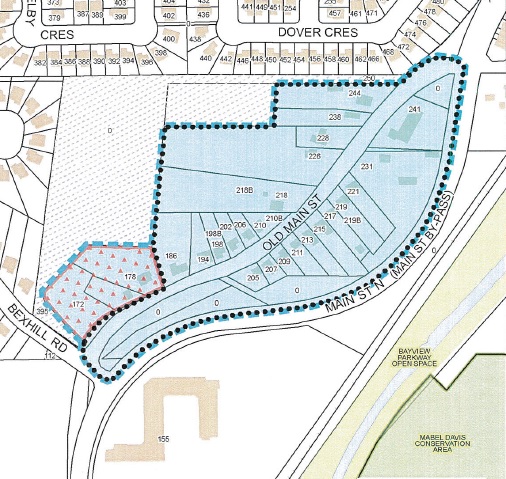
Coming from a standing start, she persuaded the Town's planners to recommend to Council on Monday (15 May 2017) that an "Interim Control By-law" should be slapped on Old Main Street, immediately halting development applications that were threatening to change the face of the neighbourhood.
Her deputation to the Committee of the Whole earlier this week listed a string of concerns about the impact of new developments.
The planners' report to Monday's Council meeting says:
"Council is given power to enact Interim Control By-laws through the Planning Act. They are, in effect, a pause button, allowing Council to put a freeze on development applications, in order to take some time out and study the situation. It allows for Council to take a bigger picture view of the potential for change in an area where large scale redevelopment was not previously considered."
The report goes on:
"Council must have a justifiable planning rationale for enacting an Interim Control By-law. They can be appealed to the Ontario Municipal Board after their passing. An Iterim Control By-law can freeze development for a period of one year with a possible renewal of one more year (renewal requires Council enact another By-law); for a total of two years..."
The Town's planners have a symbiotic relationship with developers, nurtured over many years. They are rarely on the side of community groups. Now, in a welcome move, they say a study of the area is required.
Their report says:
"An Interim Control By-law could freeze all development, including the current Development Application and prohibit the acceptance of any new applications."
Councillors, who typically lean like crutches on the recommendations of the Planning Department, are certain to approve the report and impose the Interim Control By-law.
This would never have happened without the Paddytown campaigners.
Christina Herancourt, in particular, deserves a round of applause.
This email address is being protected from spambots. You need JavaScript enabled to view it.
You can read the report here. Open packet for Council meeting on 15 May 2017 and scroll to page 62.
- Details
- Written by Gordon Prentice
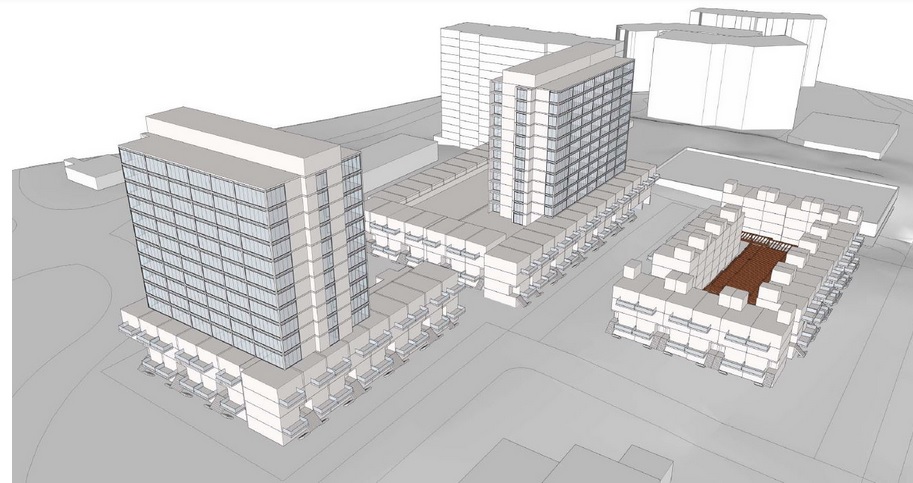
The Rose Corporation - the people behind the King George School Lofts and Town Homes - are planning a huge new development off Davis Drive at 175 Deerfield Road, Newmarket.
The 4.4 acre development site is next to their 15 storey rental building going up at 212 Davis Drive.
The site is currently industrial but the Rose Corporation is planning a major residential development of more than 500 units. 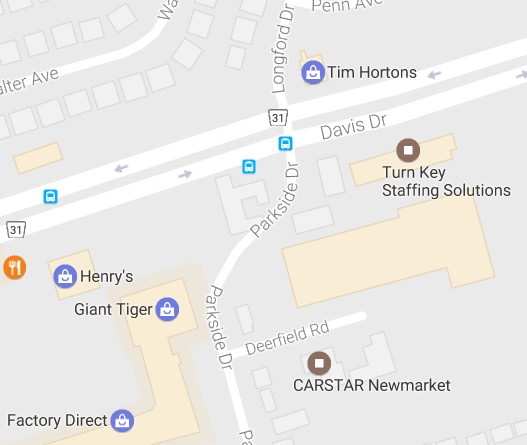
They are still at preliminary design stage but say the project may include purpose built rental apartments, condominiums, and freehold town homes.
The Rose Corporation has been asked by Newmarket councillors to take another look at their King George development on Park Avenue to see if they can increase the distance between the renowned heritage home at 182 Church Street and the Townhouse development.
On Monday, councillors agreed a site specific zoning application setting the distance between the heritage home and the townhouses at 7' 5" - blowing apart their own zoning standards in the process.
But apparently that's what zoning standards are there for.
To be amended.
This email address is being protected from spambots. You need JavaScript enabled to view it.
- Details
- Written by Gordon Prentice
Councillors have now voted to amend their Official Plan to allow Townhouses to be built at the King George School site in Ward 5. Until yesterday that was not allowed. They also agreed a complementary and site specific Zoning By-law amendment to allow Residential Townhouse Dwellings (R4-R) on the site. 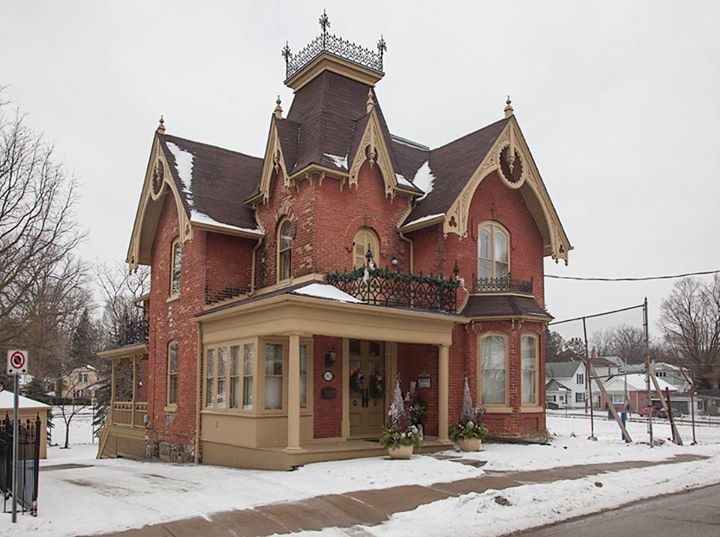
The magnificent historic 182 Church Street, built in 1881, will soon have new neighbours who will, unfortunately, be too close for comfort. The old house will soon be crowded by new Townhouses a mere 7' 5" away. Inevitably 182 will lose some of its majesty, sitting as it does on the brow of the hill on Church Street.
The Town's Heritage Advisory Committee recommended a 20' buffer between 182 Church Street and the new townhouses but, astonishingly, their views were not even referred to by councillors. They could have done so in closed session but why go into closed session in the first place? Our old friend "legal advice" was cited.
We heard nothing from Jason Ungar, the deputy director of planning, who sat in on the meeting at 182 Church Street last Thursday. He would have said something in the closed session.
"Reaching out"
Unfortunately, Councillor Kwapis has turned out to be an empty vessel. If you live in Ward 5 and you have an issue with the Council you may get an email from Councillor Bob Kwapis "reaching out to you" suggesting he can help. Don't be fooled. Label it spam and move on. 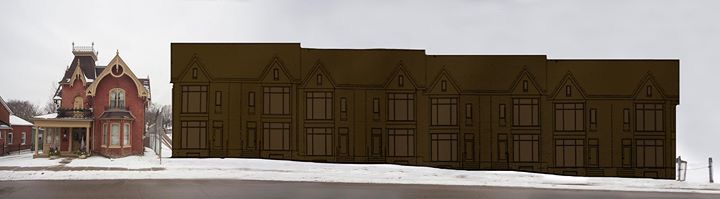
Kwapis was in a position to influence things despite betraying profound ignorance of the planning system and how it works. In many important respects he is an innocent abroad so I cannot be too censorious. He doesn't know what he doesn't know.
In Newmarket there is a tradition (admittedly flexible) of deferring to the Ward councillor on Ward matters. Kwapis was given all the ammunition he needed to mount a stout defence of 182 Church Street. He had the views of the Heritage Advisory Committee. He ignored them. He was reminded the Town's own Official Plan precluded Townhouses at King George. That's why the developer was seeking an OP amendment. 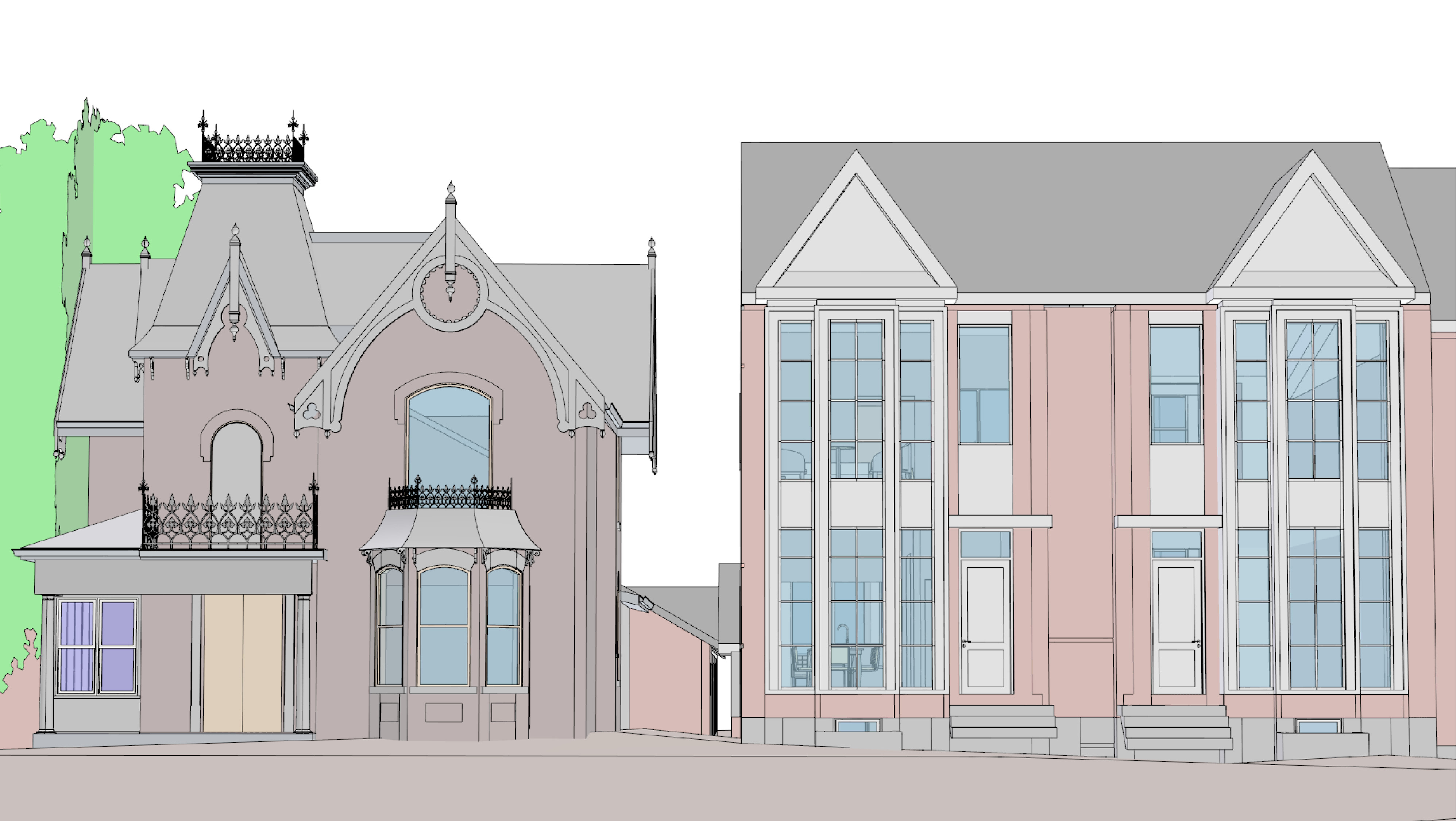
The credulous Councillor Kwapis told us we had to be guided by the recommendations of the experts - into which category we must presumably include the Director of Planning, Rick Nethery.
It was the same Rick Nethery, of course, who knowingly misled councillors on the Clock Tower development which is also in Kwapis' Ward. The development's FSI (a measure of the density of the development) was given as 2.9 whereas Nethery knew all along it was over 4. Why should Kwapis trust an "expert" who deceives?
I feel your pain
Regional Councillor John "I feel your pain" Taylor also deserves a mention. Years ago, during the Glenway saga I recall him telling a packed meeting at Crosslands Church that Marianneville (the Glenway developer) gave no ground. He complained that "not once did the developers reduce the unit count by one." He felt for those who would lose their back yards to housing. He confessed that if this happened to him he would be outraged. 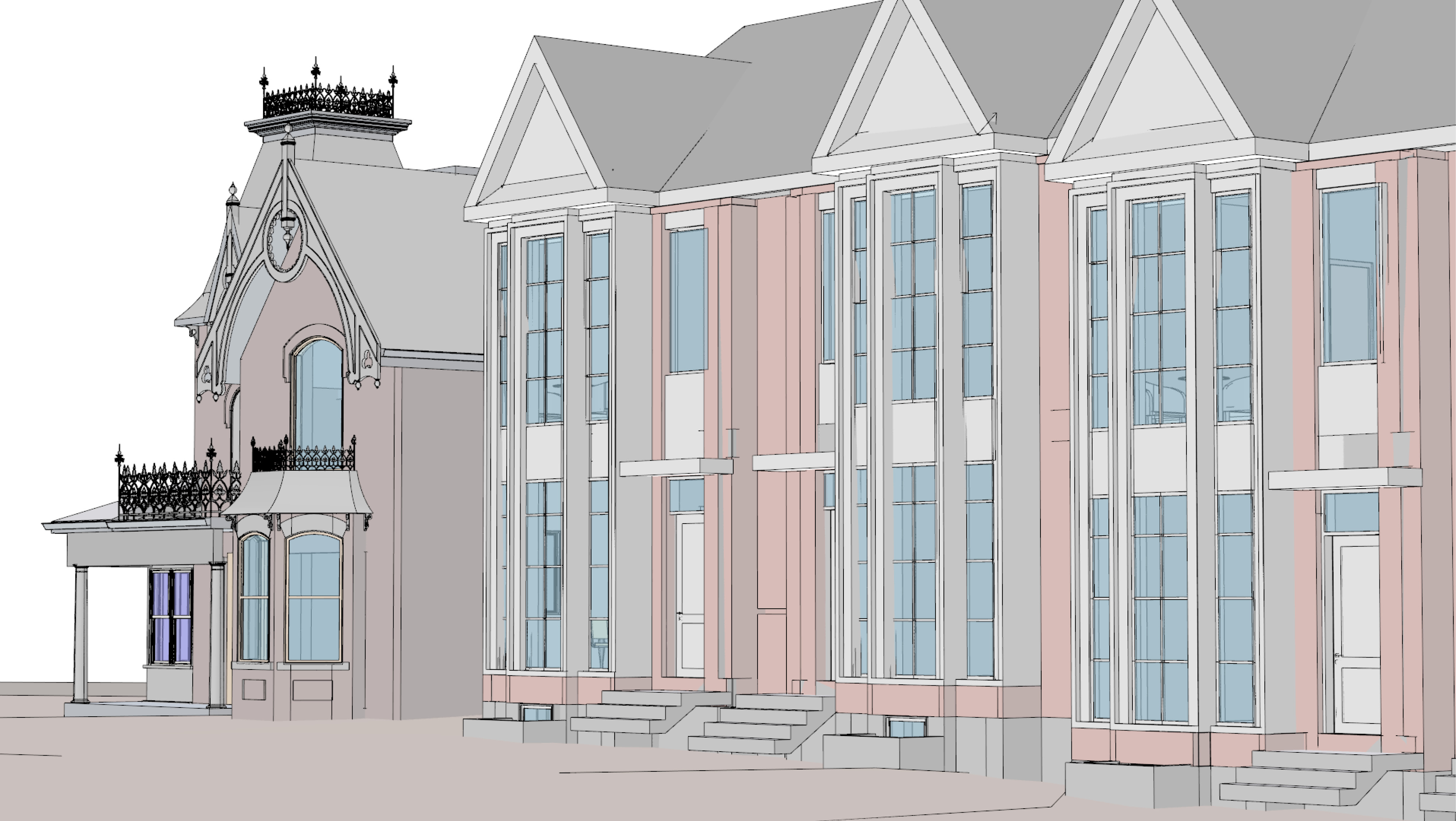
I didn't hear any outrage from him yesterday. Of course, it wasn't in his backyard.
Taylor told us that if he lived there on Church Street he would feel very strongly the distance between the two buildings should be much greater.
Thomas the Tank Engine calls for more distance
My own Ward councillor, Tom Hempen, (or "Thomas" as his splendid Mom insists on calling him) suggested the developer could be requested to increase the distance between the Townhouse block and 182. I suppose if you don't ask you don't get. So, good lateral thinking Thomas!
The Rose Corporation is not short of money (see below). They can afford to lose one townhouse to give the old house some breathing space. They would win plaudits for doing the right thing - even if our councillors shamefully did not.
This email address is being protected from spambots. You need JavaScript enabled to view it.
Background: 400 Park Ave Inc (linked to the Rose Corporation) bought the old school from Chrisula and Neil Selfe on 12 August 2016 for $3,500,000. The Selfes had bought it from the York Region School Board in November 2011 for the knock-down price of $1,275,000. 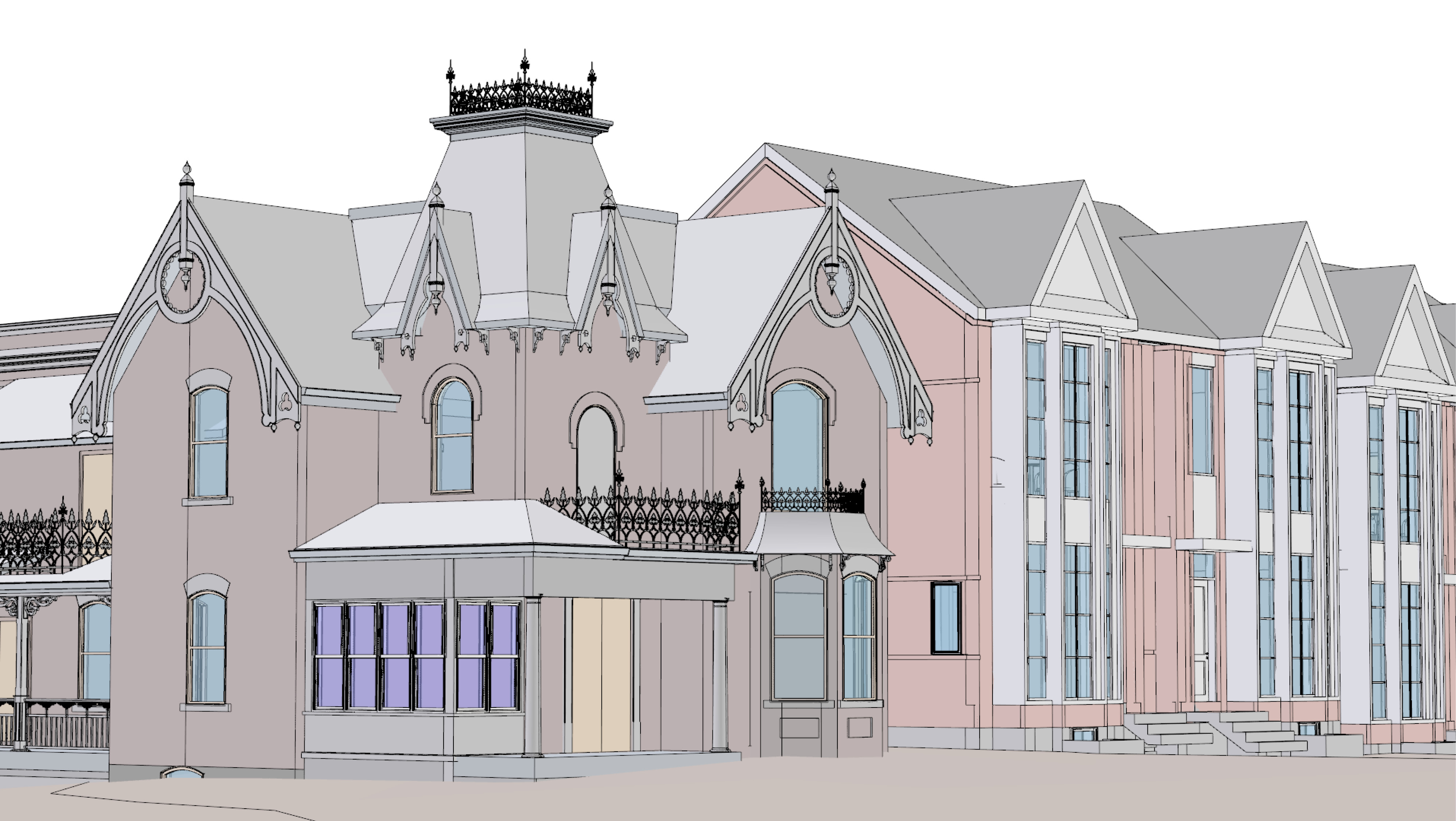
The Rose Corporation and financial reliefs. The Rose Corporation is currently building 212 Davis Drive which is rental. To encourage developers to build in corridors such as Davis Drive the Region and the Town offer substantial financial incentives. This is money due to the public purse which is deferred. These are, in effect, public subsidies. The so-called development charges are levied on developers to help pay for the services and infrastructure that are provided by the municipalities to support the new development.
I recall John Taylor telling me how proud he is of the new rental building. And why shouldn't he be? He was an enthusiastic supporter of 212 Davis Drive and the associated financial reliefs which run into the many millions of dollars.
Public money. But we should also remind ourselves that public money is being used to lubricate the development and get it off the ground.
York Region agreed to defer development charges on 212 Davis Drive for three years, interest free. Deferrals are generally limited to 18 months. This was matched by the Town of Newmarket which also agreed to defer development charges, building permit fees and cash in lieu of parkland again for up to three years.
The last time I looked at the proposed 2017 development charge rate the figures were $28,161 for each large apartment (over 700 sq ft) and $20,555 for every small apartment (under 700 sq ft). There are 225 apartments at 212 Davies Drive but I don't immediately know the split between large and small units. But, anyway, you can do the math.
What was said yesterday at the Committee of the Whole:
 Mayor: We have had the benefit of our legal advice and what I'd like to do then is bring forward item number 7 which is the planning report relative to the 400 Park Avenue King George School. Can I have a motion with respect to the recommendations that are before you please? Councillor Kwapis. Moving the recommendations? And I should have a seconder. Who wishes to send these recommendations? Councillor Twinney.
Mayor to Kwapis: Go ahead as the mover.
 Bob Kwapis: Thank you Mr Mayor. Just a couple of questions maybe to our staff. First before talking about this. Um... Is the developer meeting the height requirement By-law and... at this time?
Mayor: Mr Nethery
Director of Planning Rick Nethery: (Very long pause) Through you Mr Mayor. I apologise for the pause. I am just having a look at the report and I believe the height does comply with the requirements and I can certainly confirm that for you when I have that opportunity.
Kwapis: Second question. I have a few questions for you I hope you don't mind. My second question would be um.. The set-back from the development from the actual um... property line it is one and a half metres that is err... in compliance with our By-law? At this moment. Am I correct?
Nethery: That's correct Mr Mayor, through you.
Kwapis: Are you satisfied with the insurance through the process if there is any damage being done or is that something you will be requested if there is any damage during the process because there is um... foundation of the house. Any special type of insurance that need be required?
Nethery: Mr Mayor, through you. If Council were to approve this application it will also be subject to a site plan agreement and Committee and Council gets to establish any particular requirements through that exercise as well. One of our standard requirements is a construction management plan which identifies a lot of the sort of mitigation opportunities associated with a construction project that is underway.
I think we have also heard that the applicant has offered to do a third party assessment of the foundation of the heritage home next door which I think is a good idea because it sets a baseline for the work that will be ultimately done if it is approved and then it can be measured against that in the event there is.. some damage was to be done.
Kwapis: So, let me just ask again. Do we have insurance... or will we be asking for satisfactory insurance in case there is any damage to an historical house during construction?
Nethery: Through you Mr Mayor. I can't speak to insurance but we would be holding securities to ensure that the work is done as required.
Kwapis: If the damage... Let me try a different way... If the damage is more extensive than the securities do we have any kind of way of going and making sure that there is... any damage is rectified outside of the security that we have currently?
Nethery: Through you Mr Mayor. I am not sure if I can best answer that question given that it is to do with insurance. That is not our area of specialty.
Mayor: Mr Shelton.
Chief Administrative Officer, Bob Shelton: If I could add to that. And I would ask that if anything that I'm saying (requires) some additional comment from staff then they should please do that. But what Rick is referring to is these pre and post inspection processes that take place relative to an area such as this and, typical unless a site plan agreement have changed, the site plan agreements provide for security and then they augment that security through a clause, if it is still in there, that says and anything beyond that security requirement can be collected in a like manner of taxes. So there is that provision. In addition to that, staff can pursue through the site plan agreement and discussions with committee relative to insurance. To cover that as well.
Kwapis: Thank you. Mr Mayor. I totally understand that there are many opinions and many points of views regarding many of the developments in our Town. And I respect every one of these opinions. I assure you that every opinion is taken under consideration. Staff takes this public feedback and works with the developer to accommodate as much as reasonably possible and in this case the developer has made extensive adjustments to their development from the original application and many of them were discussed.
In our meeting that we had last week I had a chance to meet with Mrs Campbell at her house last week and with two of our staff members that were also present at the meeting as Mrs Campbell mentioned during her deputation.
Um... the bottom line is ultimately we need to rely on our experts and expert recommendations of our staff. Our experts have full and extensive process to evaluate every concern and every point of every view that is brought forward to them. The reason we have experts and staff is to analyse all aspects and provide us with non biased professional advice. After much consideration of all the facts, I feel that I have no choice but to support the recommendation brought forward to us. With a caveat. I would like to put a motion and a request that the developer to provide best efforts to improve the set-back to accommodate the three metres between the two houses.
Mayor: Your request then is an amendment? Is that a friendly amendment?
Jane Twinney (inaudible)
Mayor: Seconder
 Jane Twinney: Yeh. Thank you and thank you to our staff for clarifying some of the information that was provided to us. Again I think you know that the applicant has conformed to our by-laws that we have set in place right now and I think that obviously that's important.
That's where our by-laws stand right now and I am looking forward to actually… I put forth a motion to have our by-laws with respect to infill sites looked at and I think this is going to be an opportunity at that time to maybe address some of these concerns with regards to set backs and things of that nature within infill projects. But if this project does comply then I feel I mean I can support the applicant. Application.
Mayor: Any further discussion? Councillor Hempen
Tom Hempen: Thank you Mr Mayor. I appreciate the request that the set-back be improved. Developers in many ways are our partners in our community. The motion that was made is not compelling the developer but the developers work in our community need to work with our community so it is my hope that the developer make every effort to work with the resident and try to satisfy their needs as well.
Mayor: Regional Councillor.
 Regional Councillor John Taylor: Thanks very much. The proposal in front of us in many ways is, and I think everyone would agree, has some significant attributes and gains for the Town of Newmarket. I think (of) the many years where members of the area and the community - I live in that area - were concerned about the outcome of the school and we see the school being preserved and enhanced.
There were I think at least ideas floating around previously. Other people looking and considering. Can you add on to it? Can you add a floor? Do this. That. So it is my personal opinion that in many ways and in most ways this development is an attractive and reasonable and heritage... respectful of heritage in terms of what it is putting forward for that space. The density. Everything is...
We live in a day and age where we are used to getting proposals that try to seek out density far, far beyond what we feel comfortable with and here we have something that seems to be - at least in my estimation - somewhat reasonable.
The sticking point and there is no question it is a sticking point is the distance between the townhomes and Ann Campbell`s home and I can`t disagree with the opinion she`s sharing. If I lived there I would feel that strongly that it would be very very desirable to have a greater distance between the two buildings but we also have to make sure that the positions we take are defensible and, as was pointed out, this does meet the requirements.
So we have put forward a request and we hope that the developer will look at this and try to find a way to at least meet the 3 metres that was referenced by Ms Campbell, recognising that they have already met the 1.5 metres overall so if that is somewhat achievable I think something to move towards. But having said that, I think that, you know, supporting the development as it is, there`s a lot of strong attributes to this development and the one area of concern is I think that hopefully can be addressed but we as a Council or at least I will support it this time. Thank you.
Mayor: Thank you. Any other comments. All those in favour?
Carried unanimously.
Councillors Vegh, Kerwin, Broome and Bisanz chose not to speak.
- Details
- Written by Gordon Prentice
Read this first. As everyone who has been following the Clock Tower saga must know I am not a lawyer nor am I a pretend lawyer. I believe people who have a story to tell should be allowed to tell it in their own way without having to fork out $10,000 for a lawyer to tell their story for them. But, that said, I concede that sometimes lawyers are necessary. And here is one instance... 
Report-Back Newmarket councillors who are meeting tomorrow in the Committee of the Whole will likely get a report-back on Wednesday's Clock Tower OMB pre-hearing from the Town's affable counsel, Leo Longo (right). Curiously, there are now two developments for the Clock Tower before the Board - Options A and B.
They should ask him if there is any possibility of success in bringing forward to the OMB a motion to dismiss Forrest's appeal without a hearing.
Forrest is bad karma
Forrest filed his appeal on 14 December 2016 claiming his development represented "good heritage planning and good planning in general". His appeal, unchallenged by the OMB adjudicator, Blair Taylor, looks likely to drag on well into 2018. If it takes this long to get resolved, serious damage will be inflicted on Newmarket's Historic Downtown. Boarded up retail units, painted black, are bad for business.
The second edition of Bruce Krushelnicki's "Practical Guide to the Ontario Municipal Board" tells me:
"One of the most important and difficult motions that may be made prior to a full hearing is whether a Board hearing should take place at all."
Section 45 of the Planning Act allows the OMB to dismiss an appeal if it believes the reasons set out in the notice of appeal do not disclose any apparent land use planning ground upon which the plan or part of the plan that is the subject of the appeal could be approved or refused by the Board.
Jurisdiction of the Board
We know the Clock Tower (Option A) cannot be built because Forrest needs Town-owned land. Put simply, M'Lud, does it makes sense (in terms of public policy) for the OMB to press ahead at great expense in time and public money and decide an appeal for a building that cannot be built. As it happens, this is one of the issues coming up tomorrow at an OMB Hearing in Richmond Hill.
"Does the Board have jurisdiction to approve a draft plan of subdivision that shows any aspect of the appellant's proposed development (including a road allowance) on lands which are not owned by the appellant?"
Substantially different
Section 45(1) of the Planning Act allows the Board to:
"dismiss all or part of an appeal without holding a hearing if, in the Board’s opinion, the application to which the appeal relates is substantially different from the application that was before council at the time of its decision".
Krushelnicki tells us this section of the Planning Act addresses:
"a long held criticism by the municipal sector that an application could be very substantially revised after the appeal is set, and the Board in effect would be dealing with a matter that the municipal council had not had any chance to consider in the first instance".
It seems to me from a layperson's perspective that Option B is a very substantially revised version of the application under appeal. We are told there is now no requirement for Town-owned land yet every previous iteration of the Clock Tower development going back to June 2013 and perhaps even further required Town-owned land. To pretend, as Forrest's lawyer does, that this is simply an inconsequential modification of the original is absurd. Kagan told us on Wednesday Option B looks the same as Option A "from the outside". This is risible.
Abuse of process
Krushelnicki says it has always been the case that the OMB could dismiss appeals that it considered improper or an abuse of process. It is as plain as a pikestaff - at least to me - that this is an abuse of process. But the OMB adjudicator, Blair Taylor, did not see it this way so I could be missing something here that is only discernible to those schooled in the law.
Krushelnicki concludes:
"The Board exercises a broad discretion to dismiss an appeal without a hearing. It will exercise this jurisdiction with care and attention to the statutory right of applicants to object to a proposal (or to a lack of decision) and balance this against the prospect of an expensive hearing that will take time, cause delay and take up valuable resources."
"While the body of (decided) cases may provide some guidance as to how the Board should act in certain circumstances, each case must be assessed on its own merit. What is certain is that motions to dismiss form one of the more difficult determinations that conscientious Board members will make, and requires a careful and balanced consideration of what is both fair and practical."
So there we have it.
Option A - the original application which was decisively rejected by the Town of Newmarket in a unanimous vote on 5 December 2016 - simply cannot be built.
Option B, sprung upon the Board's prehearing with no notice, is a very different animal from Option A, insofar as we can tell. We have some drawings and elevations but no supporting documentation.
Mr Forrest is making it up as he goes along. It is an abuse of process and the appeal should be dismissed.
M'Lud, I rest my case.
This email address is being protected from spambots. You need JavaScript enabled to view it.
From the Planning Act
Dismissal without hearing
(45) Despite the Statutory Powers Procedure Act and subsection (44), the Municipal Board may dismiss all or part of an appeal without holding a hearing on its own initiative or on the motion of any party if,
(a) it is of the opinion that,
(i) the reasons set out in the notice of appeal do not disclose any apparent land use planning ground upon which the plan or part of the plan that is the subject of the appeal could be approved or refused by the Board,
(ii) the appeal is not made in good faith or is frivolous or vexatious,
(iii) the appeal is made only for the purpose of delay, or
(iv) the appellant has persistently and without reasonable grounds commenced before the Board proceedings that constitute an abuse of process;
(b) Repealed: 2006, c. 23, s. 9 (10).
(c) the appellant has not provided written reasons with respect to an appeal under subsection (24) or (36);
(c.1) the appellant intends to argue a matter mentioned in subsection (25.1) or (37.1) but has not provided the explanations required by that subsection;
(d) the appellant has not paid the fee prescribed under the Ontario Municipal Board Act; or
(e) the appellant has not responded to a request by the Municipal Board for further information within the time specified by the Board. 1996, c. 4, s. 9; 2006, c. 23, s. 9 (8-10); 2015, c. 26, s. 18 (19).
Same
(45.1) Despite the Statutory Powers Procedure Act and subsection (44), the Municipal Board may, on its own initiative or on the motion of the municipality, the appropriate approval authority or the Minister, dismiss all or part of an appeal without holding a hearing if, in the Board’s opinion, the application to which the appeal relates is substantially different from the application that was before council at the time of its decision. 2006, c. 23, s. 9 (11).
Page 176 of 290