- Details
- Written by Gordon Prentice
Blair Taylor is a one term member of the Ontario Municipal Board. He was appointed in 2012 full-time and his term expires on 16 October 2017. Before joining the OMB Taylor was a senior Partner in the law firm of O'Connor, Macleod Hanna LPP. He practised in the municipal and development field. Clearly he lives and breathes the law but he is not very good at asking questions. 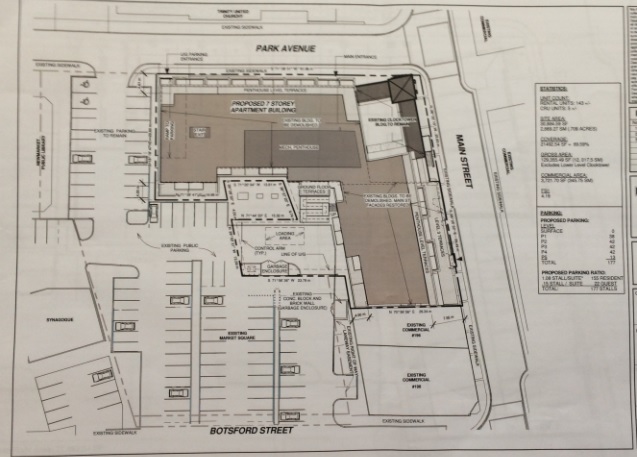
He believes Parties should be represented by lawyers. As I tap this out I am reflecting on Bruce Krushelnicki's standard reference book "A Practical Guide to the Ontario Municipal Board" which solemnly states on page 237:
"... the Board takes very seriously the claim one does not need to be represented by counsel to appear before the Board and earnestly attempts to conduct fair hearings involving unrepresented parties."
It is taken as a given that lawyers know the law. That is what distinguishes them from lesser mortals. But they are also supposed to be good at thinking on their feet and arguing a case logically and coherently.
Unfortunately, there was little evidence of this on Wednesday from Blair Taylor. He took an inordinate amount of time taking down in longhand the names and addresses of participants and their email addresses. He asked one or two process questions about the diary commitments of counsel and when they were free. He would then pass these on to "the woman who must be obeyed" at the OMB who deals with the meetings matrix. Oh dear! 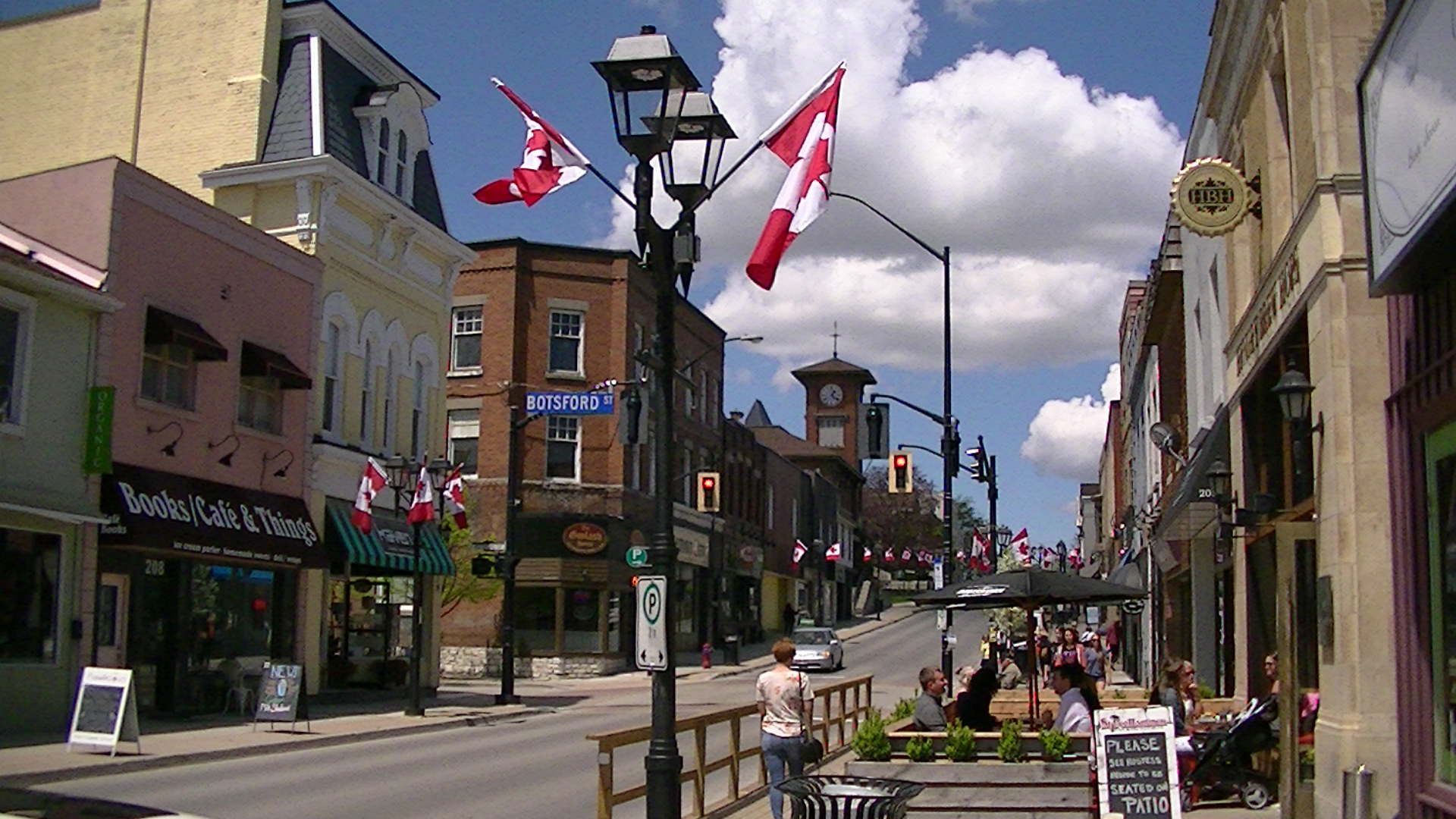
But on the matter of substance before the OMB he said absolutely nothing. I could have done a better job. As it happens, I woke up this morning startled to realise I had been dreaming about a different Blair Taylor - one who deftly handled the Clock Tower prehearing. I was full of admiration. This is how it all unfolded:
Blair Taylor: Good morning everyone. Today we meet as a prehearing. We shall be agreeing the logistics of the hearing proper including the start time, its expected duration and location and housekeeping matters of that kind. That said, I shall want to touch on the central issues which will arise at the main Hearing on the Clock Tower appeal which will follow on dates to be agreed. I want to get an idea of what is in prospect.
Mr Kagan, can I invite you to say a few words about the main issues as you see them and the nature of the appeal.
Ira Kagan: Well, Sir, you have in front of you two appeals. The first relates to the refusal of my client's application for the Clock Tower development which was rejected by the Town of Newmarket on 5 December last year. We are also appealing on a related issue concerning the applicability of the Town's Heritage Conservation District By-law. These are, in truth, old issues and things have moved on a bit.
Blair Taylor: I want to come back to that. But, for the moment, proceed.
Ira Kagan: My client needs Town-owned land for his proposed development but there was a tacit agreement entered into with the Town in June 2013...
Blair Taylor: Can I just stop you there Mr Kagan. Are you telling the Board the Clock Tower development cannot be built without Town-owned land being made available?
Ira Kagan: Well it is not quite as straightforward as that. My client had the tacit consent of the Town in June 2013 that its lands would be made available.
Blair Taylor: Was there a binding agreement or tacit consent? And if it was the latter, what do you mean by tacit consent?
Ira Kagan: As you know, Sir, a tacit agreement is created or has effect by operation of law rather than by being directly expressed.
Blair Taylor: Mr Longo? Was there an agreement - formal or informal - that was entered into in June 2013? And how would you define "tacit consent"?
Leo Longo: I am advised that my client received a land exchange request from the Clock Tower developer but deferred any final decision on that proposal until the application had gone through the usual public planning process and received development approval from the Council. And, of course, that never happened. So there was no binding agreement.
Blair Taylor: Mr Kagan you are putting before the Board this morning two options. Option A concerns the matter under appeal and Option B, as I understand it, relates to a completely different application. You have long experience. When did you last present two options to a Board prehearing? Does this happen often? And which one are you asking the Board to consider? I cannot decide on both.
Ira Kagan: Well, Sir, let me explain. Option A cannot be built because it relies on getting Town owned land which is not forthcoming. Option B is a slight variation of Option A but it sits wholly on land owned by my client. Apart from that there is no difference whatsoever between A and B.
Blair Taylor: Mr Longo?
Leo Longo: This is, in effect, a new application with very substantial variations from the original application. I only received notice of this on Monday evening and I have not had the opportunity to take instructions from my client. But, at first blush, it seems to me the Town would want to consult the public after getting a full set of background documents and not just the drawings we have in front of us. I note they are dated 1 May. This is a very unusual situation we find ourselves in and I sympathise with the Board. You have been put, Sir, in a difficult position as a result of the actions of my friend opposite. (Mr Kagan)
Blair Taylor: I agree. This is most unsatisfactory. We owe it to the public to case manage in an effective and responsible way and that means no ambushes. If I can quote my excellent OMB colleague Bruce Krushelnicki who says on page 231 of his authoritive guide to OMB practices and procedures:
"An important principle of hearings and something that can readily be required in the pre-hearing process is the prior disclosure of the major elements of a case. Hearings are not supposed to be secret attacks based on ambush and surprise."
Ira Kagan: (Eyebrow arched. Inaudible.)
Blair Taylor: We heard from Mr Prentice earlier on behalf of the Architectural Conservancy of Ontario. He is not a lawyer but he seems to have the knack of asking concise and pertinent questions. It is abundantly obvious he has been following things with exemplary conscientiousness for a good while.
Mr Kagan, do you think it is fair to him and to others like him that you drop this new application - whether it is a revision or something else I cannot say - on to their laps without a by-your-leave? Is this a satisfactory way to proceed?
Ira Kagan: (bows his head and mutters something. inaudible)
Blair Taylor: I am going to adjourn the prehearing for 45 minutes to get some answers to these and other questions. I would ask the public to remain as we are going to get through this today and find a way forward.
(Now scanning the audience) Mr Prentice. Yes, you. Mr Prentice I'd like you to join us.
(I made the last bit up.)
This email address is being protected from spambots. You need JavaScript enabled to view it.
Meaning of Tacit as in Tacit Consent:
Silent; not expressed; implied or inferred; manifested by the refraining from contradiction or objection; inferred from the situation and circumstances, in the absence of express matter. Thus tacit consent is consent inferred from the fact that the party kept silence when he had an opportunity to forbid or refuse. (Black's Law Dictionary)
- Details
- Written by Gordon Prentice
This morning (Wednesday 3 May) Bob Forrest presented to the OMB prehearing new plans for his Clock Tower development. The Town's counsel, Leo Longo, received them on Monday evening (1 May). The rest of us saw them for the first time a few hours ago. The drawings, plans and elevations are all dated 1 May 2017. The ink is still not dry. (See right and below.)
Forrest's lawyer, Ira Kagan, told the OMB that the application under appeal was never going to work as the Town was not prepared to enter into a land swap. Kagan said there was "tacit consent" to a land swap dating from June 2013.
He said the land swap was conditional on Forrest getting approval for his development which, of course, never happened. The Town rejected the Clock Tower development on 5 December 2016.
Conjurer
Instead of this being the end of the matter, Kagan conjured an "Option B" out of thin air.
The original application under appeal to the OMB is still on the table but it is not going anywhere as it cannot be built without Town owned land.
With Option B, Forrest builds his Clock Tower development entirely within his own property line, on the footprint of his own land. As a result, it is a grotesque overdevelopment.
It has a Floor Space Index of 4.19 giving it the highest density of any building in Newmarket.
Back to rental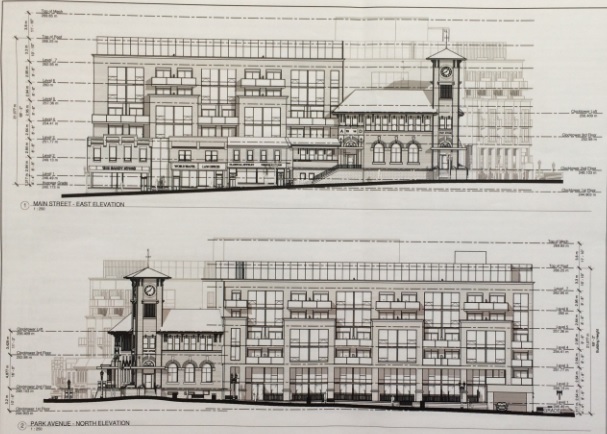
Forrest has swung back to rental from condo and says there will be 143 rental units. There will be 5 commercial retail units all serviced from Main Street South and not from the rear of the property as is recommended in the Town's Official Plan. Bad planning, I'd say.
There will be underground parking for 177 vehicles going down 5 levels. Back in February 2014, at the first Statutory meeting, Forrest's loyal lieutenant, Chris Bobyk told us that for technical reasons the underground car park couldn't be built solely on the land that Forrest owns. It would mean going down to four levels and that is way too deep. The soil is too wet. That's why they needed Town owned land - the parking garage wouldn't go down too deep and "spread out".
The view from the Old Town Hall is garbage
Directly opposite the Old Town Hall will be the development's garbage enclosure. What a charming prospect!
Kagan now says Option B looks pretty much like the version under appeal. Seven storeys high. Five commercial units on Main.
The Town's jolly counsel, bearded Leo Longo, tells us the Town will not support its own lands being used for underground parking. He says he is prepared to accept, on Kagan's word, that Option B looks much like the original application.
But, at some stage, the OMB will have to decide what it is being asked to decide on. It cannot have two alternatives before it - the original Option A and the new Option B.
No back up studies
Forrest has introduced at the 11th hour a set of drawings with no back up studies whatsoever. And, significantly, no Planning Rationale Report. How is it possible to take a view on the latest proposal without key background information? Will the public be consulted? If not why not? Option B is, in effect, a new application rather than a tweaked revision of an earlier one. The parking changes alone are huge.
What Forrest is doing is a clear abuse of process.
But who is going to call him out if not the OMB itself?
This email address is being protected from spambots. You need JavaScript enabled to view it.
19 people will appear at the OMB Hearing as Participants.
Meaning of Tacit as in Tacit Consent:
Silent; not expressed; implied or inferred; manifested by the refraining from contradiction or objection; inferred from the situation and circumstances, in the absence of express matter. Thus tacit consent is consent inferred from the fact that the party kept silence when he had an opportunity to forbid or refuse. (Black's Law Dictionary)
- Details
- Written by Gordon Prentice
The long running soap opera - Di Muccio v Taylor - mercifully splutters to a close tomorrow with speeches from Taylor and Blommesteyn. The latter has been researching the law of defamation for years and is expected to cite the law at inordinate length in an attempt to browbeat the Judge.
As we all know, Di Muccio is demanding $5,000 from Taylor to compensate for hurt feelings, mental suffering and damage to her reputation.
It is worth noting President Di Muccio's action in the Small Claims Court has not cost her a penny. But the rest of us, through our taxes, will be paying a small fortune for this absurd litigation. The whole thing has been a circus from start to finish.
I hope this point is not lost on members of her little self-absorbed sect, the York Region Taxpayers' Coalition.
The trial comes on at 10am tomorrow, Wednesday 3 May 2017, in Courtroom 404.
I won't be there but my spies will insist on telling me all about it.
This email address is being protected from spambots. You need JavaScript enabled to view it.
- Details
- Written by Gordon Prentice
Just days before the OMB pre-hearing on the Clock Tower we know there has been deception on a grand scale. We have all been led up the garden path. 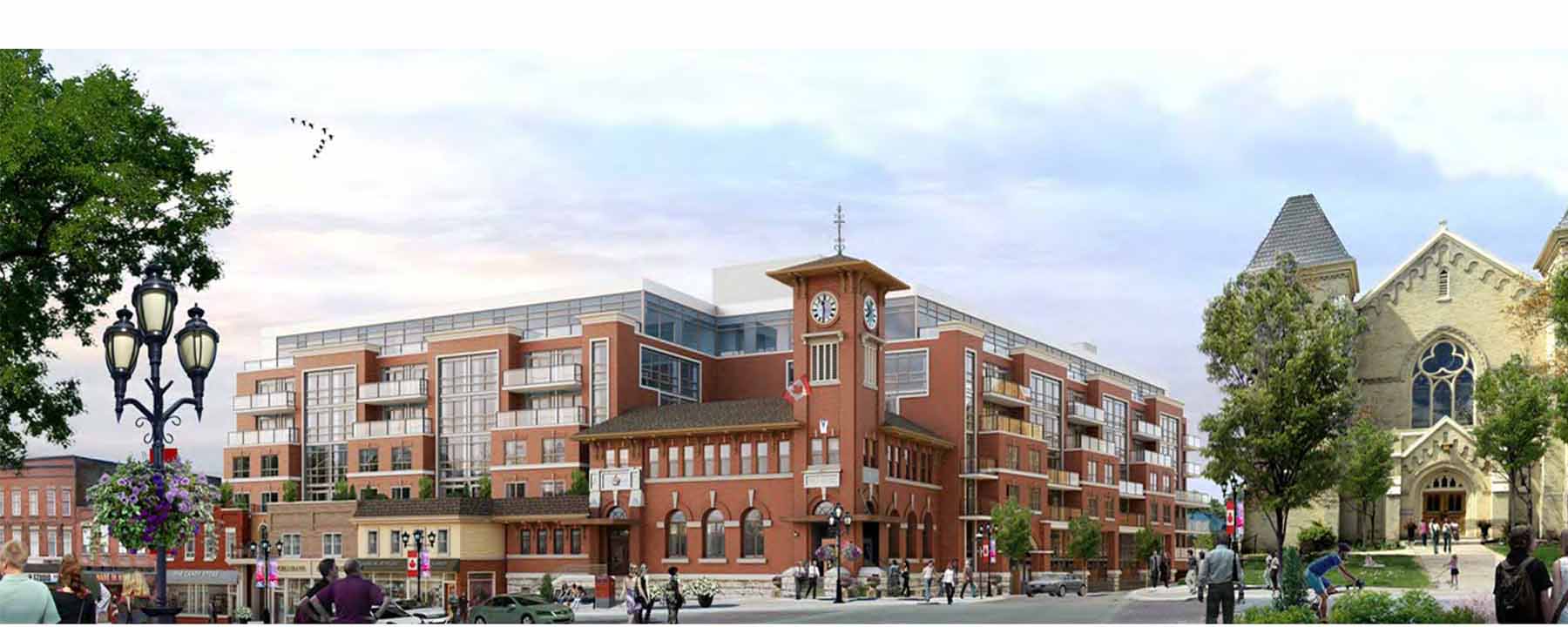
Was it just a rogue planning department with its own agenda or does it go further?
Last week I received an email from the Town's Legislative Services Department giving answers to questions I had asked some time ago. The author is not identified so I use the word Town instead. My questions together with the Town's answers are shown at the bottom of this page.
Clock Tower FSI is 4 not 2.9
The Town now concedes that:
"after review... a FSI of 4 would more accurately describe the proposal".
Question. When was this "review" undertaken?
The Clock Tower FSI has been a matter of debate and contention for months if not years. Siegfried Wall has repeatedly raised the issue. I have taken a deputation to Council on the development's FSI and invited questions from the Mayor and Councillors. There were none. (On video at 39 minutes in.)
Ontario's Ministry of Housing tells us the Floor Space Index is:
"The ratio of the gross floor area of a building or buildings to the gross area of the lot on which the building or buildings are located. A floor space index (FSI) of 2.0 would indicate that the gross floor area of a building could be up to 2 times the gross area of the lot on which it is located."
Density 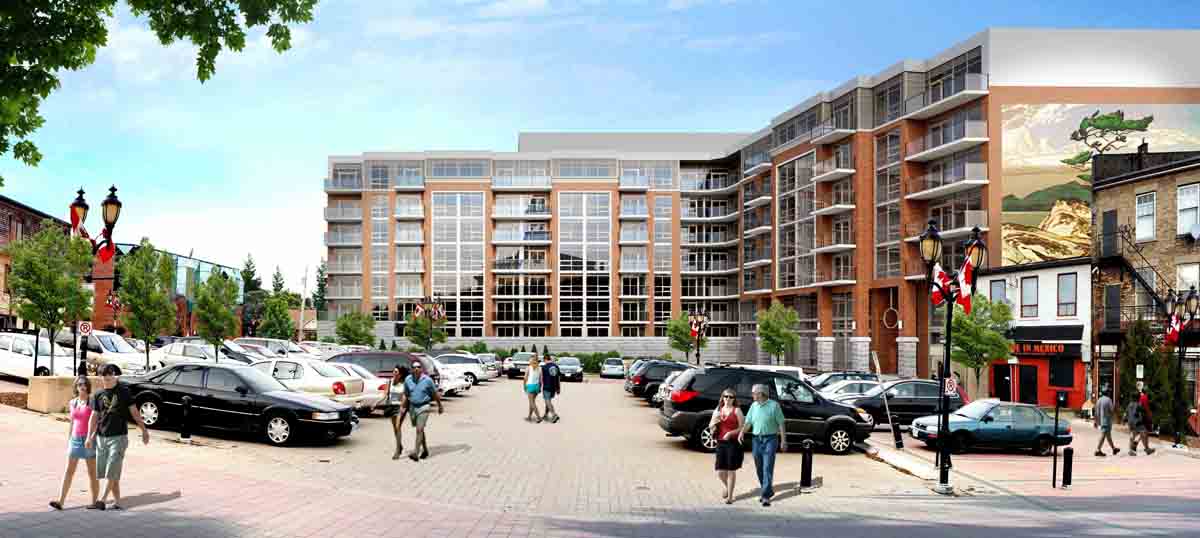
FSI is a tool used by planners to regulate density of development. Broadly speaking, this correlates to the number of people living and working in a specific area. Pick up any Newmarket Planning document from the Secondary Plan and the Official Plan to the Zoning By-law and the three letters "FSI" are everywhere. Despite this, there is only a fleeting reference to FSI in the report of 28 November 2016 that went up to councillors for decision.
"The performance standards for this zone (Historic Downtown Urban Centre) have a minimum height of 2 storeys and a maximum height of 3 storeys, a minimum floor space index of 0.5 and a maximum floor space index of 1.0... The applicant is proposing to amend the existing zoning on the property to allow for a 7 storey building stepped back from Main street with a floor space index of 2.9."
There was no commentary on the FSI and how it was calculated. No mention of density. And there was no indication that the true FSI was 4.
The bigger the better 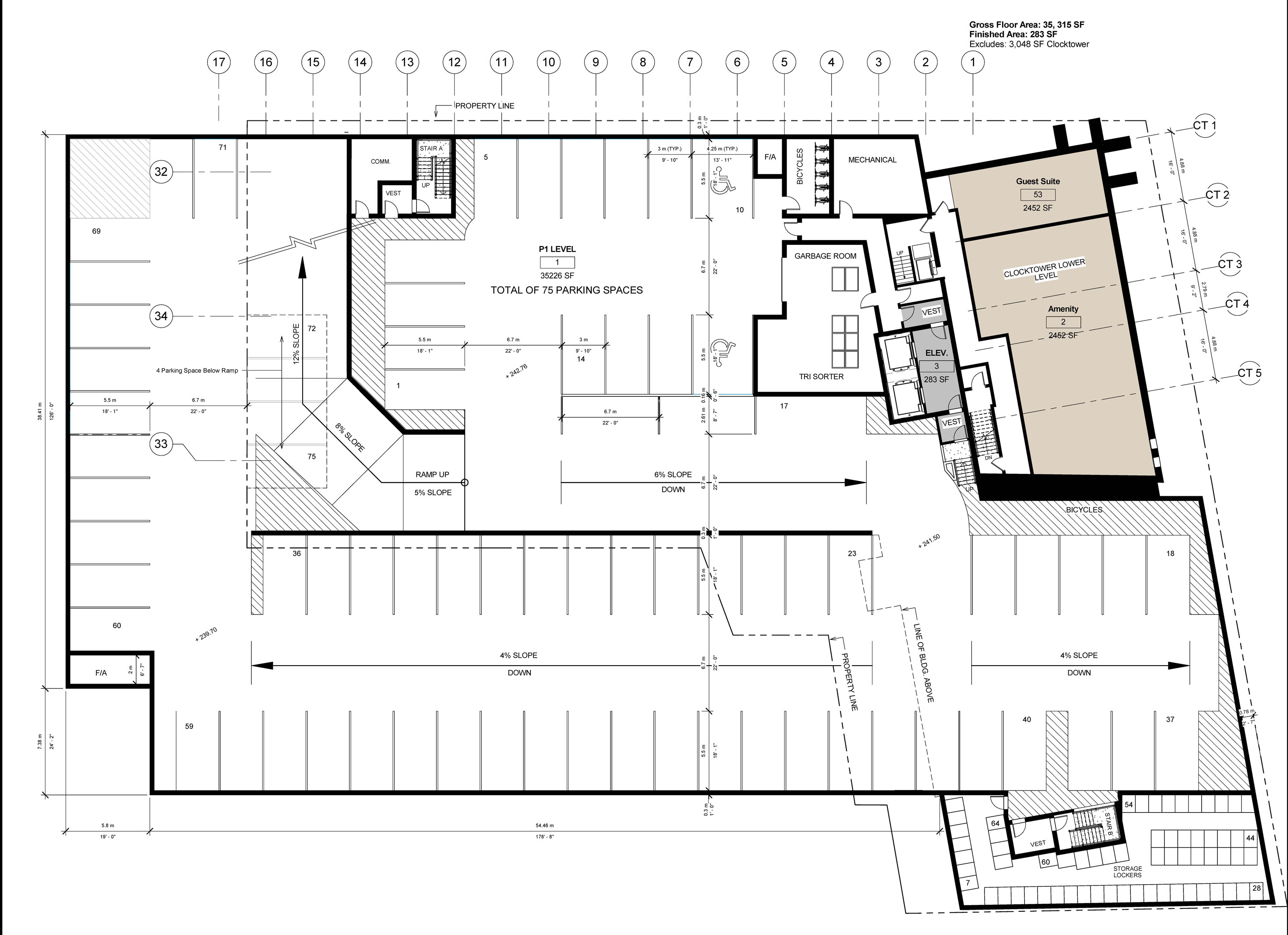
Bob Forrest wanted as big a development as he could get away with. One with lots of units. That's the way to make money. Forrest and his loyal lieutenant Chris Bobyk made any number of statements over the years making it clear that their various developments were not viable and could not be financed if they didn't get approval for a minimum number of apartments. The denser the better.
As we have seen, developments in the historic downtown should be no more than three storeys with an FSI of 1.0.
The Town now tells me the failure to address the issue of FSI was not an oversight. Siegfried Wall's comments were taken to mean he was concerned the development was much too large and was incompatible with the surrounding area. Anyone viewing the video record of the Statutory Public meeting on 9 May 2016 (at 2 hours 33 minutes in) will see he specifically raised the issue of density and dwelt on it, concluding the development's FSI was four times the permitted FSI - a position the Town now accepts as correct.
Manipulation and deception
At Monday's Council meeting (24 April 2017) I asked the Mayor if he had been aware of the potential for manipulation of the Clock Tower development's FSI. I reminded him he described the report of 28 November 2016 as "comprehensive". (The video is at 29 minutes in.)
I said the report was misleading because it gave an FSI of 2.9 for the Clock Tower development when the Director of Planning knew it to be much higher. The true figure was not in the report and I asked if he was aware of that deception. 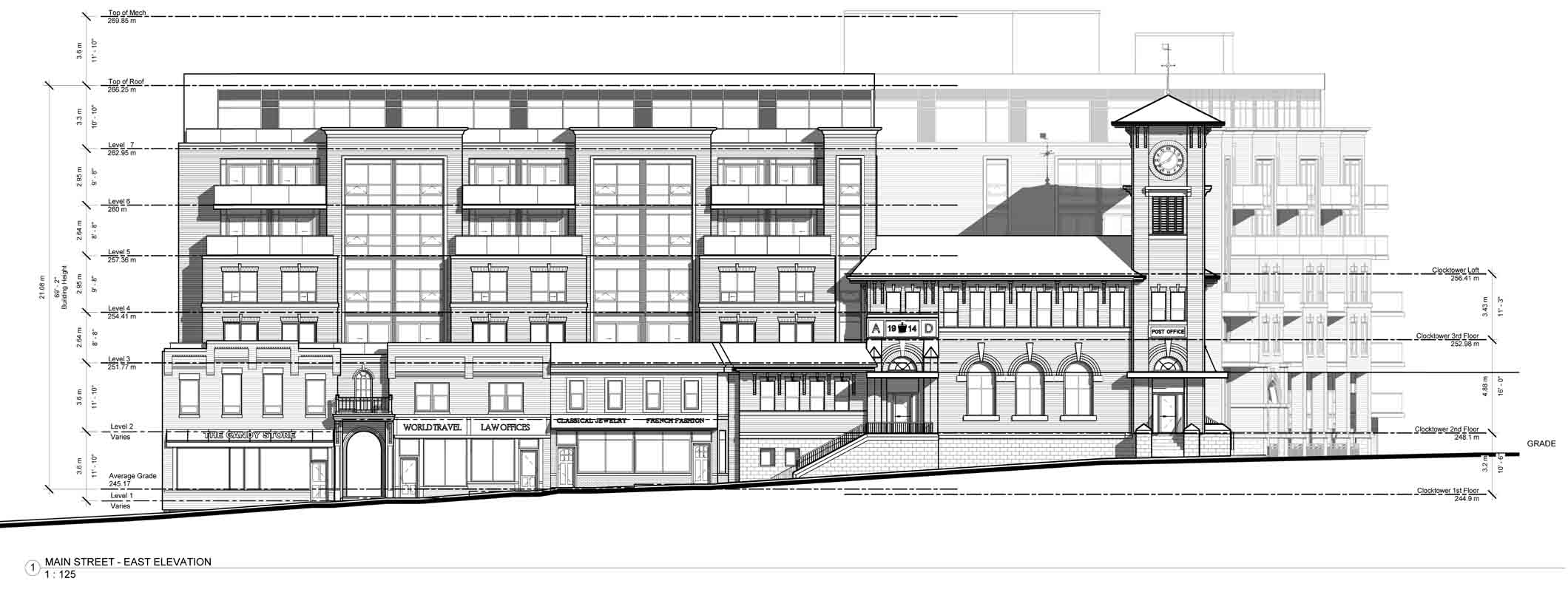
Van Bynen replied:
"I take exception to you using the word deception. And I also take exception for you inferring it was misleading information. And you need to be prepared to defend that.”
Well, here goes...
As a fact, we know the developer calculated his bogus FSI by using underground land in the ownership of the Town which lies outside his lot. The Town now concedes that using underground parking is not permitted by the Town's Zoning By-law 2010-40.
As a fact, we know the Planning Department did not specifically discuss the FSI with Forrest's Heritage Consultant, Goldsmith Borgal, nor with the Town's peer reviewer, ERA Architects. 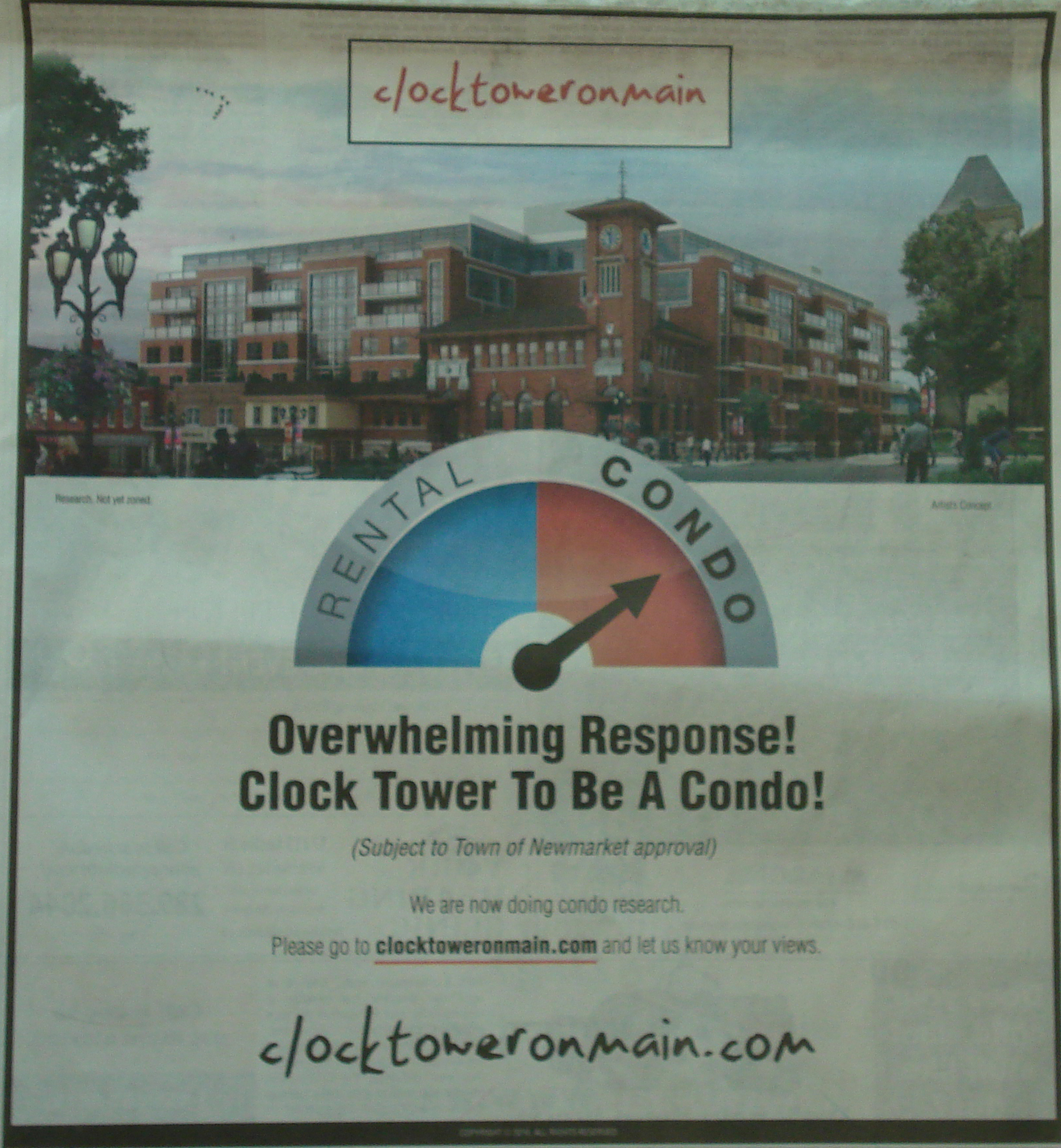
As a fact, we know the Gross Floor Area (which is central to the calculations for determining FSI) should not include underground parking areas either inside or outside the applicant’s lot.
Despite all this, the Town says the recommendations of the report would have remained the same as the more relevant focus of the report from a planning perspective is on height and massing.
In the absence of any other plausible explanation, it seems perfectly clear (at least to me) that the Town's planning department was working to an agenda designed to secure approval for Bob Forrest's Clock Tower development.
The fact that it all went pear-shaped at the very end and the planners had to come up with a compromise - which was rejected by councillors - is neither here nor there. The deception was prolonged, sustained, deliberate and unapologetic.
This email address is being protected from spambots. You need JavaScript enabled to view it.
Question: In the section of the comprehensive Staff report on Community Consultation no reference was made to the point made by Siegfried Wall at the Statutory Public meeting on 9 May 2016 and, again, on 28 November 2016 that the FSI of the development (without factoring in Town owned land) was over 4. Why was that? Was it simply an oversight?
Town's Answer: The report did not discuss the details of the proposed FSI and calculations. I would not consider it an oversight as I understood the point of Mr. Wall’s comment to be that the proposal was much too large and not compatible with the surrounding area, which was the entire thrust of the report when discussing building height and massing.
The report did not identify and answer each question or comment provided from public consultations, but rather grouped comments into themes. The report provided an in depth review of the proposed height and step backs along with their impacts as this provides a more telling and accurate visual of what is being proposed. As you know, a building can take many different forms (height and coverage) while still meeting a particular FSI.
Question: The Town's own Secondary Plan stipulates:
"The calculation of gross floor area shall not include the floor area of underground and above grade parking structures, bicycle parking, or public transit uses, such as stations or waiting areas."
(Newmarket Secondary Plan. Office consolidation October 2016. Section 6.4.5 xii)
You told me on 2 December 2016 the underground parking space was used to calculate the FSI of the Clock Tower development. Is it the case that the italicised extract above only applies to the Secondary Plan area or is it policy across the Town.
Town's Answer: With regard to your question on the definitions relating to Gross Floor Area to clarify, the gross floor area as defined by the Zoning Bylaw and the Secondary Plan does not include underground parking areas.
The Land Area as defined in the secondary plan could include off street parking areas whereas the Lot Area as defined in the Zoning By-law would not include the Town owned lands beyond the property boundaries. We will be looking more closely at this in our zoning bylaw review to ensure consistency within the document. Having said that, after review, while a FSI of 4 would more accurately describe the submitted proposal, the recommendations of the report would have remained the same as the more relevant focus of the report from a planning perspective is on height and massing. _______________________________________________________________
Definitions in the Town's Zoning By-law 2010-40
Gross Floor Area means the aggregate of all floor areas of a building or structure above or below established grade, which floor areas are measured between the exterior faces of the exterior walls of the building at each floor level but excluding any porch, veranda, cellar, mechanical room or penthouse, or areas dedicated to parking within the building. For the purposes of this definition, the walls of an inner court shall be deemed to be exterior walls.
Floor Space Index means the gross floor area of all buildings on a lot divided by the lot area.
Definitions in the Newmarket Secondary Plan:
The Land Area to be used for calculating FSI shall include all lands used for buildings; off-street parking and servicing areas; private streets and driveways; lands conveyed to the Town for underground hydro; private landscaped etc etc... and exclude public streets etc etc...
_________________________________________________________
- Details
- Written by Gordon Prentice
The casual demolition of irreplaceable historic commercial buildings - including one dating from the mid 1840s - represents
"good heritage planning"
according to Ira Kagan, the lawyer who will be presenting Bob Forrest's case to the OMB next Wednesday.
So why not allow property owners to demolish if they want to? They can keep the facade, perhaps spruce 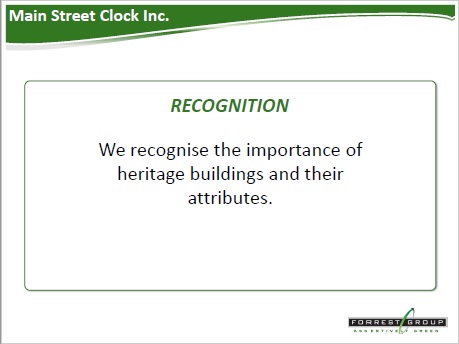 it up a bit, and redevelop the site? What's wrong with that?
Demolish to Conserve!
In the bizarre world of planning, contaminated as it is by vested interests and biddable lawyers, it doesn't seem at all ridiculous to recommend the demolition of historic buildings in order to save them.
The Town's 2011 Heritage District Plan (replicated word for word in the 2013 By-law) says this about historic buildings (the definition of which includes the historic commercial buildings at 184, 188 and 194 Main Street South that Forrest wants to demolish).
"The Town recognises the importance of four forms of historic buildings in the district - historic landmark buildings, historic commercial buildings, historic houses and the historic registry office - and their heritage attributes."
and for the avoidance of doubt
"The Town supports the retention of historic buildings in the district."
and to underline the point
"Demolition and replacement of historic buildings needs to be avoided since the conservation of historic buildings is essential to maintaining the district's authentic historic character and revitalising the district."
Competing Interests
Forrest's Heritage Impact Assessment, prepared for him by Goldsmith Borgal in February 2016, said a review of (previous) plans for the old downtown
"reveals numerous competing interests that ultimately must be weighed by the Town Council. It is Town policy to revitalise Lower Main Street South while preserving its historic character. However, throughout these various plans, the realistic ability to achieve these two goals simultaneously has not been outlined/illustrated."
Goldsmith Borgal conclude:
"...the proposed development, while not meeting the Heritage Conservation District Plan in terms of height restrictions, could be mitigated in order to allow the Town to meet a number of other planning goals in the Historic Downtown Core. This Heritage Impact Assessment includes examples of how architectural design can further enhance the compatibility of new construction in Heritage Conservation Districts."
So Goldsmith Borgal's strategy is to "mitigate" the impact of the Clock Tower development rather than rule it out completely despite the fact that historic buildings will disappear forever. Once they are gone they are gone. 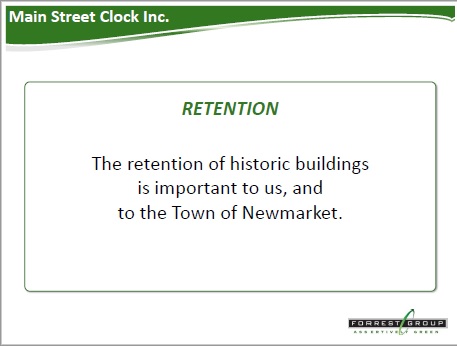
The Town's Planning Department did not tell Goldsmith Borgal about the manipulation of the Floor Space Index (and neither had they told ERA Architects) despite the fact that the FSI feeds directly through to the built form.
Like the rest of us they were kept in the dark. That said, I might have expected them to ask the question: How come we are looking at such a huge structure in a Heritage Conservation District?
One of the oldest buildings on Main Street. No point keeping that!
In Goldsmith Borgal's review of the buildings to be demolished there is this pen portrait of 184 Main Street South:
"This two storey frame structure is the oldest extant building on the block, and perhaps one of the oldest buildings on Main Street South. Dating to the early nineteenth century (likely c1840), it may be the building referenced in an early drawing of the street as the Smith & Emprey General Store. Smith and Emprey was established in 1837 and was located immediately north of the North American Hotel. The building at 184 Main Street South is also represented on the 1862 plan of the Village on lot 19. Charles Hargrave Simpson, whose wife, Anne Mary Simpson, was Ontario's first woman druggist, once owned the building. Simpson operated an apothecary from 1886 to 1914."
This is one of the buildings to be casually demolished in the name of:
"good heritage planning".
The Town commissioned ERA Architects to peer review the work of Goldsmith Borgal.
The peer reviewer and its obligations to the Town
In November 2013 the Town awarded a “peer review” contract to ERA Architects of Toronto. They would be responsible for peer reviewing any Heritage Impact Assessment for 180-194 Main Street South. The terms of the Town's contract with ERA Architects specified:
"The Peer review will evaluate the assessments provided for heritage impact assessment. This review will include, but is not limited to, addressing inconsistencies, factual errors, discrepancies, inappropriate conservation advice not consistent with recognized standards (see below), omissions and misrepresentations.
It is expected that the preferred protective and mitigative measures will be consistent with the Lower Main Street South Heritage Conservation District Plan and recognized standards for heritage conservation..." (my underlining)
ERA Architects prepared two peer reviews (on 22 July 2014 and 4 May 2016) and the central question of the demolition of historic commercial buildings was not addressed head-on by either.
ERA understood the developer was intending to adaptively re-use the Old Post Office Building and "where possible" incorporate the facades of the 19th century commercial buildings at 184, 188 and 194 Main Street South. (190 Main Street South is a late twentieth century commercial infill with no architectural or historic merit.)
Their recommendations included this one to:
"Clarify the conservation strategy by describing the intended approach to each building being conserved."
The honest answer is to say they are being conserved through demolition with the facades being retained if possible.
Ludicrously, we shall only be told about the “conservation strategy” if the development gets the go-ahead. It will then be addressed at site plan approval stage. I wonder what the owner of the restaurant/pub at 196 Main Street South thinks about that. He shares a roof and a floor with 194 which is earmarked for demolition. 194-196 are two halves of the same building. 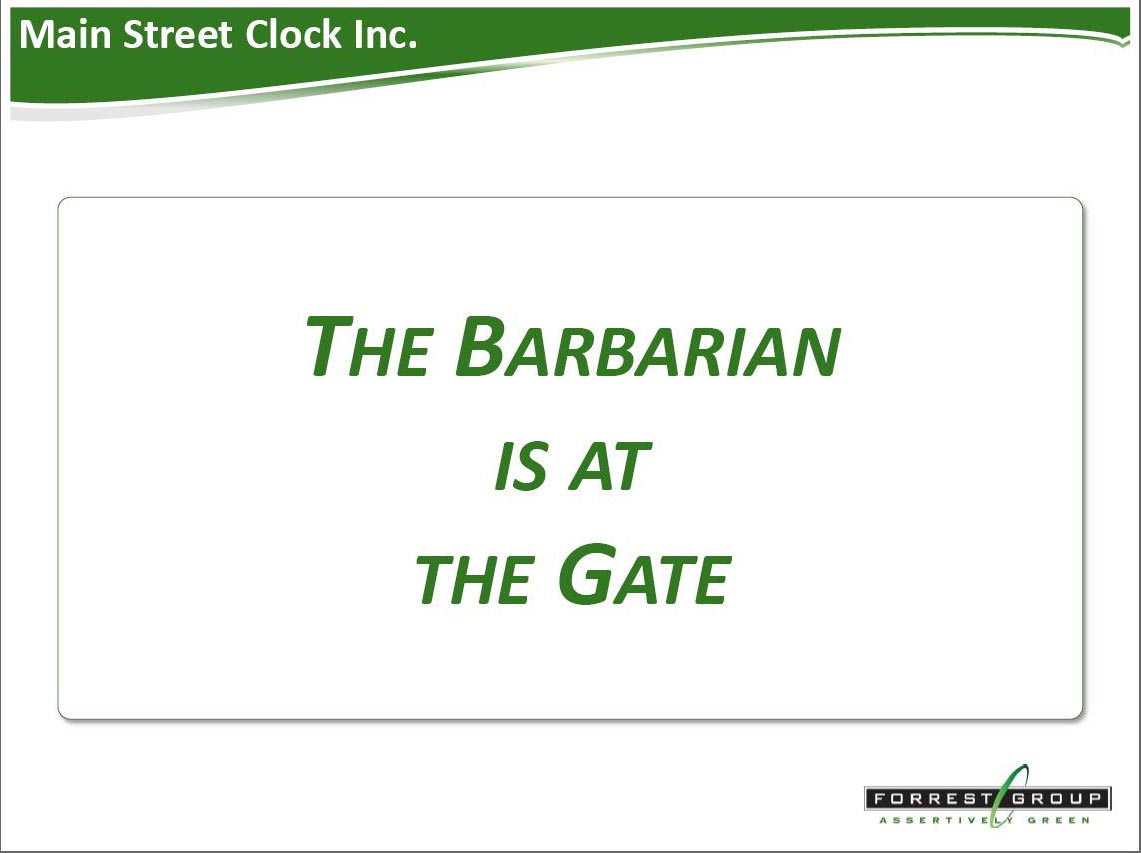
How do you square demolition with the HCD Plan?
There are concerns that ERA Architects may not have fulfilled the terms of their contract with the Town which obliged them, when preparing their peer review, to take into account the Town's Heritage Conservation Plan which specifically ruled out the demolition of historic commercial properties. I wrote to the Town's Chief Administrative Officer, Bob Shelton, who replied on 20 May 2016:
"I have discussed the review process with staff and advise that your comments and various points will be provided to Planning staff for their consideration as part of the review of the peer review report."
I have asked for sight of the review of the peer review but I am still waiting. These days it's radio silence.
Forrest Fumes
In his intemperate letter of 28 November 2016 to councillors, Bob Forrest railed against the Town's decision to reject his Clock Tower development by calling in aid the heritage professionals:
"the two heritage experts have brought monumental experience and expertise to support staff... that experts of this caliber (sic) should be arbitrarily rebuffed without consultation or explanation is disappointing, surprising and, in the end, shocking."
When Forrest started out on his calamitous Clock Tower project he wanted to demolish the historic buildings at 184, 188 and 194 in their entirety. But his slideshow presentation to the Statutory Public Meeting on 9 May 2016 tells us he now loves heritage - and so does the Town.
Now that we've got that boring and tedious conservation stuff out of the way...
bring up the wrecking balls and let's get started!
This email address is being protected from spambots. You need JavaScript enabled to view it.
Page 173 of 286