I suspect only a handful of people in Newmarket have ever heard of Robert Jenrick – until today the Shadow Minister of Justice in the UK’s Conservative Party. 
But in Britain his defection to the Reform Party, led by the fawning Trump sympathiser, Nigel Farage, is the big political news story of the day.
Jenrick says he won’t resign and trigger a by-election.
He should.
Imploding
The Conservatives - once the UK’s most successful political party if measured by its length of time in office - is now imploding. A growing number of Tory MPs have abandoned the Party and are being welcomed into Reform by Farage, its populist beer swilling, cigarette smoking leader.
Here in Canada we also have regular instances of MPs swapping parties while refusing to face their voters in a by-election to see if they agree with the decision.
In November 2025 Chris d’Entremont the MP for West Nova / Acadie-Annapolis (Nova Scotia) crossed the floor from the Conservatives to the Liberals. He was swiftly followed by Michael Ma — the Conservative MP for Markham–Unionville (Ontario) – who joined the Liberals last month taking Mark Carney within striking distance of getting a majority in the House of Commons.
And, of course, here in Newmarket-Aurora, Belinda Stronach famously crossed the floor to the Liberals in 2005 a year after she had been first elected as the riding’s Conservative MP. (Photo: Belinda and Frank Stronach in 2008)
Party swapping happens all the time. (Even dumped candidates do it.)
Quaint Assumption
The right thing to do, then and now, is to resign and seek a fresh mandate from the voters under your newly acquired Party affiliation.
The fact that defecting MPs cling on without facing the voters rests on a quaint assumption they are elected for their sterling qualities as individuals and not as a result of their Party affiliation.
The practice in Canada mirrors the position in the UK as described in this note from the UK House of Commons Library in 2014:
There are no rules requiring the resignation of an MP who leaves one political party for another. A convention that the Member changing parties does not resign to fight a by-election accords with the arguments of Edmund Burke in the late 18th century. This MP, himself a rebel in a number of policy areas, considered that a Member was a representative rather than a delegate.
Historically, the Commons has acted on the principle that all Members of the House of Commons are individually elected, and voters put a “cross against the name of a candidate”. While decisions on candidates may be affected by their party labels, MPs are free to develop their own arguments once elected, until it is time to face the voters in the next general election.
In the UK in 1872 ballot papers were introduced for Parliamentary elections for the first time showing the names of the candidates along with any descriptions they provided such as their profession. But there was no Party label. Indeed, the Representation of the People Act 1948 explicitly forbade candidates from using Party labels. This was changed in 1969 when the Party name could be included.
Party Labels on Ballot Papers but only from 1970
Here in Canada, it was only in 1970 that a candidate’s Party could appear on the ballot paper.
But we’ve now had 55 years of electing candidates identified by their Party colours or as independents. Personally, I believe the time is long overdue for us to change the law to require a by election when an MP swaps parties and crosses the floor. But this is easier said than done.
In 2011, NDP MP Mathieu Ravignat tried unsuccessfully to amend the Parliament of Canada Act using the Private Member’s Bill route. He explained:
The bill provides that a member's seat in the House of Commons will be vacated and a by-election called for that seat if the member was elected to the House as a member of a political party… However, the seat will not be vacated if the member, having been elected as a member of a political party, chooses to sit as an independent. 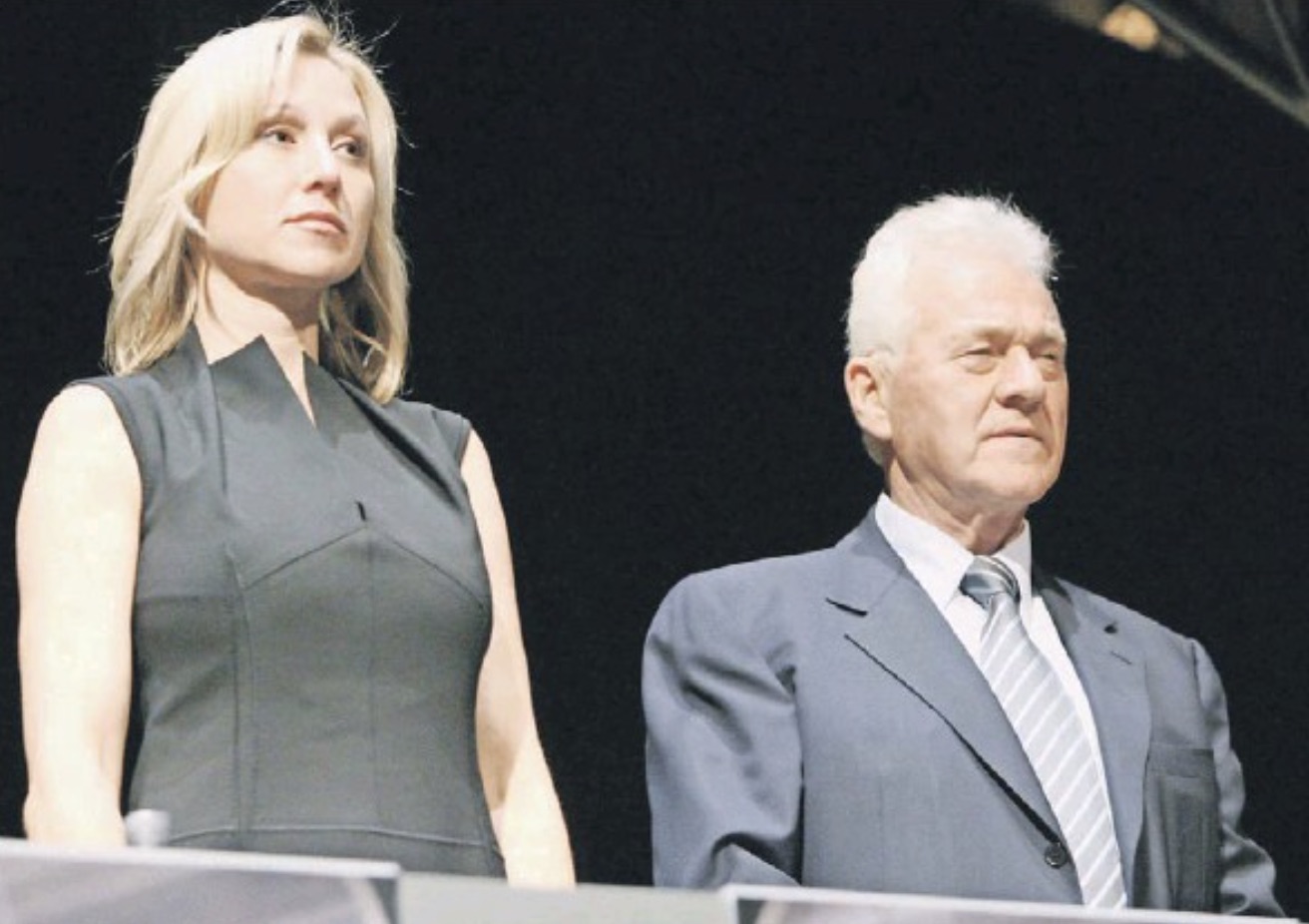
Predictably, it was defeated by 181-91. To stand any chance of success the Government would have to bring in its own Bill and I cannot see that happening any time soon.
In the meantime, do we just shrug our shoulders and grin and bear it?
Commons Majority
Would it be OK for the Carney Liberals to get a Commons majority which rests on Conservative defections?
It could happen. Pierre Poilievre's leadership review will be held in Calary at the end of the month and while there won't be a stampede out of the Party (sorry) there could be one or two disgruntled and disaffected Conservative MPs changing sides.
Conservative MPs understand Mark Carney. They find him capable. Like he knows how to run the shop.
Courage
But why can't MPs who defect from one Party to another have the courage of their convictions and resign from the House of Commons and fight a by-election under their new Party banner?
The answer I've heard a million times before is that they haven't changed. Their Party has.
Fair enough.
But what better way to test that proposition than in a by-election?
Update on 18 January 2026 from the UK's Observer newspaper: The Right Can't Unite: the fight to the death between the Tories and Reform